Ezekiel 25 - Bible Study, Explanation, and Application
Ezekiel 25 Bible Study
TIMELINE:
We are not given a specific date for this chapter, but it’s likely these words were delivered to Ezekiel shortly after the prophecy of Ezekiel 24, which was dated to the 9th year, in the 10th month, of the exile of King Jehoiachin (Eze 24:1), 588 or 587 BC.
Below is a list of kings of Judah and dates for their reign:
Amon (642-640 BC)
Josiah (640-609 BC)
Jehoahaz (also known as Shallum, 609 BC)
Jehoiakim (initially known as Eliakim, 609-598 BC)
Jehoiachin (also known as Jeconiah or Coniah, 598-597 BC)
Zedekiah (His reign ended when Babylon conquered Judah, (597-586 BC)
WHAT WE STUDIED PREVIOUSLY
Ezekiel 1 – Ezekiel had a vision of 4 living creatures, 4 wheels, and God’s throne.
Ezekiel 2 – God commissioned Ezekiel to be a prophet to his rebellious countrymen.
Ezekiel 3 – The end of the heavenly vision. Ezekiel ate a scroll of God’s words, and God called him to be a watchman over the people of Judah.
Ezekiel 4 – Ezekiel prophesies with an object lesson in the street by laying on his side for 430 days, eating rations of bread, and creating a siege scene with a brick that represents Jerusalem.
Ezekiel 5 – After the 430 days, Ezekiel cut off his hair divided it up into 3 parts and used it as a symbol for what would happen to the people of Jerusalem.
Ezekiel 6 – Ezekiel prophesies against the idol worshipers in Judah, telling them their bodies will be thrown at the feet of their powerless gods.
Ezekiel 7 – God spoke to Ezekiel about the day of His judgement. The end was near for the citizens of Jerusalem, and their doom was on the horizon.
Ezekiel 8 – Ezekiel saw a vision of the Temple in Jerusalem. God guided him through the courts and gates of the Temple and showed him the secret idolatries that filled God’s house.
Ezekiel 9 – God sends a man with a writing case to mark the foreheads of those who hated the idolatries of Judah. Afterwards, God sends 6 executioners to kill everyone in Jerusalem who didn’t have the mark.
Ezekiel 10 – God’s glory departed the inner sanctuary of the Temple and ascended to His throne carried by the 4 living creatures.
Ezekiel 11 – God announced judgement on the wicked rulers of Judah. They thought they were safe in Jerusalem, like meat in a cauldron, but God promised to bring them out for death and captivity. At the end of the chapter, God spoke of a future day, when He would regather a remnant of His people and give them a new heart and new spirit.
Ezekiel 12 – Ezekiel prophesied about the downfall of King Zedekiah by carrying his possessions out of his house as if he were going into exile. God promised that His judgement was near, and anyone who suggested otherwise would be put to shame.
Ezekiel 13 – God confronted the false prophets and sorceresses amongst the people of Judah. The false prophets falsely claimed to speak with the authority of God, and the sorceresses hunted the souls of God’s people through witchcraft and divination.
Ezekiel 14 – God condemned the elders of Judah who harbored love for idols in their hearts. He told Ezekiel Jerusalem would not be spared even if righteous men like Noah, Daniel, and Job lived there.
Ezekiel 15 – God compared the citizens of Jerusalem to useless vine wood that was good for nothing except to burn.
Ezekiel 16 – God compared his people to a young woman who he had raised and cared for. When she grew up, she turned her back on God and prostituted herself with foreign nations and idols.
Ezekiel 17 – Ezekiel spoke a parable to the people of Judah about two great eagles. The parable indicated that the King of Judah would betray Babylon and be uprooted by them.
Ezekiel 18 – The people of Judah were accusing God of punishing them for the sins of their ancestors. God clarified that each man was responsible and would be held accountable only for his own sins.
Ezekiel 19 – God lamented the unfaithfulness of His people through two laments, the lament of the lion cubs and the lament of the vine.
Ezekiel 20 - The elders of Israel wanted to consult with God, but God refused them based on their continual and cyclical rebellion against His laws. God spoke of His future judgement on Judah and His future grace that would restore the nation.
Ezekiel 21 – Ezekiel spoke of the sword of the Lord that God had sharpened to punish Judah. The king of Babylon stood at a fork in the road, and God was going to direct him and his army to Jerusalem.
Ezekiel 22 – God condemned Judah for a litany of sins and their total neglect of any attempt to keep His commands. He told them He would melt them down like metal within the furnace of Jerusalem.
Ezekiel 23 – God illustrated the unfaithfulness of Israel and Judah with a story about two sisters, Oholah and Oholibah.
Ezekiel 24 – God compared Jerusalem to a corroded pot that would be emptied and melted down. In the second half of the chapter, Ezekiel’s wife died, and God instructed him not to mourn for her publicly as a sign of the fate of the citizens of Jerusalem and their beloved city.
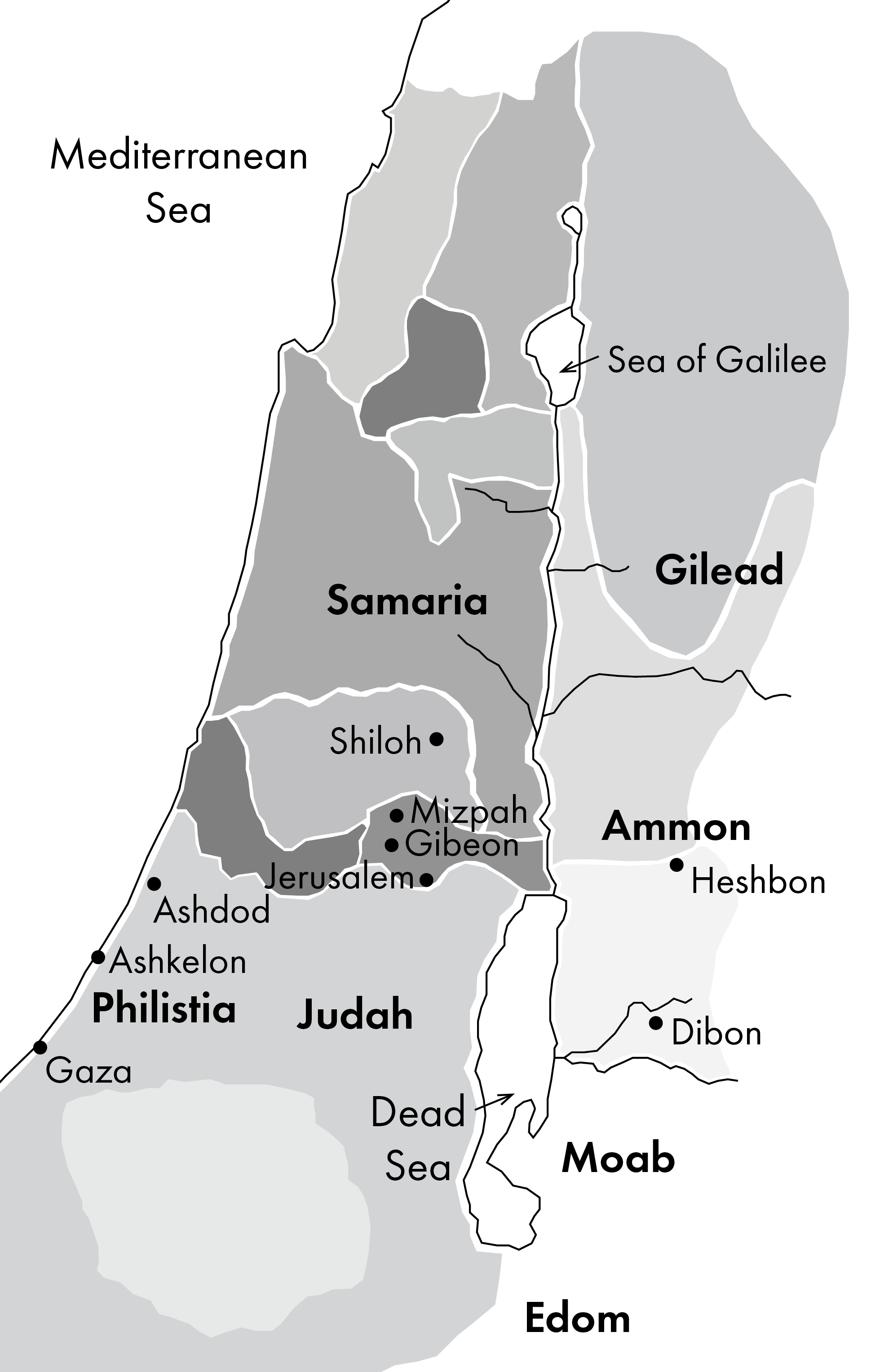
MAP:
OUTLINE:
PROPHECY AGAINST AMMON (25:1-7):
Ezekiel prophesied against the Ammonites.
God was going to punish them because they gloated over the decline and downfall of Israel and Judah.
They were going to be given over the to “people of the East,” plundered, and destroyed.
Their leading city, Rabbah, would become pasture for livestock, and the region of Ammon a place for sheep to sleep.
When these things occurred, the people of Ammon would learn not to mock the God of Israel.
PROPHECY AGAINST MOAB AND SEIR (25:8-11):
The people of Moab and Seir mocked the idea that the people of Judah were special in any way. They said to themselves, “Behold, the house of Judah is like all the other nations” (25:8).
For mocking God’s covenant with Judah, God was going to give them over to the people of the East along with the Ammonites.
PROPHECY AGAINST EDOM (25:12-14):
The Edomites had acted vengefully towards the people of Judah.
God was going to bring His vengeance against Edom, strike them down, and make the land desolate.
God stated that His vengeance would come through the nation of Israel (a possible prophecy of the conquering of Edom by the Maccabees).
PROPHECY AGAINST PHILISTIA (25:15-17):
God also condemned Judah’s neighbors to the west, the Philistines, for their vengeful behavior. He said they “took vengeance with malice of soul to destroy with never-ending enmity” (25:15).
God forewarned them that His vengeance was going to fall on them. They would receive a wrathful rebuke from the Lord.
APPLICATION:
The mockery of the people of Moab and Seir is very reminiscent of a critical comment people often make about the Church.
Moab and Seir were looking at the sins of the people of Judah and scoffing at the idea that God had any kind of special association with their nation.
People often look at the Church, observe that the people aren’t perfect, and they scoff at the idea that God has any special association with those people.
Some people feel at liberty to dismiss the value and uniqueness of the Kingdom of God because some of its citizens aren’t what they should be.
As we can see from Ezekiel 25:8-11, God takes it very seriously when people try to strip significance from what He has declared to be special.
Judah may not have been perfect, but Judah was still the nation through whom God’s covenant blessings flowed.
The people in the Church may not be perfect, but it’s still through the Church that God’s covenant blessings flow, and no one should be downplaying its importance or diminishing its value.
