Ezekiel 1 - Bible Study, Explanation, and Application
Ezekiel 1 Bible Study
TIMELINE:
The Book of Ezekiel opens in the 5th year of the exile of King Jehoiachin. Jehoiachin had been king in Judah but was dethroned by the Babylonians and taken as a captive. Ezekiel was amongst the other exiles from Judah. Ezekiel’s writing began 5 years before Jerusalem was totally destroyed by the Babylonians, which places its beginning in approximately 592 B.C.
Below is a list of kings of Judah and dates for their reign:
Amon (642-640 BC)
Josiah (640-609 BC)
Jehoahaz (also known as Shallum, 609 BC)
Jehoiakim (initially known as Eliakim, 609-598 BC)
Jehoiachin (also known as Jeconiah or Coniah, 598-597 BC)
Zedekiah (His reign ended when Babylon conquered Judah, (597-586 BC)
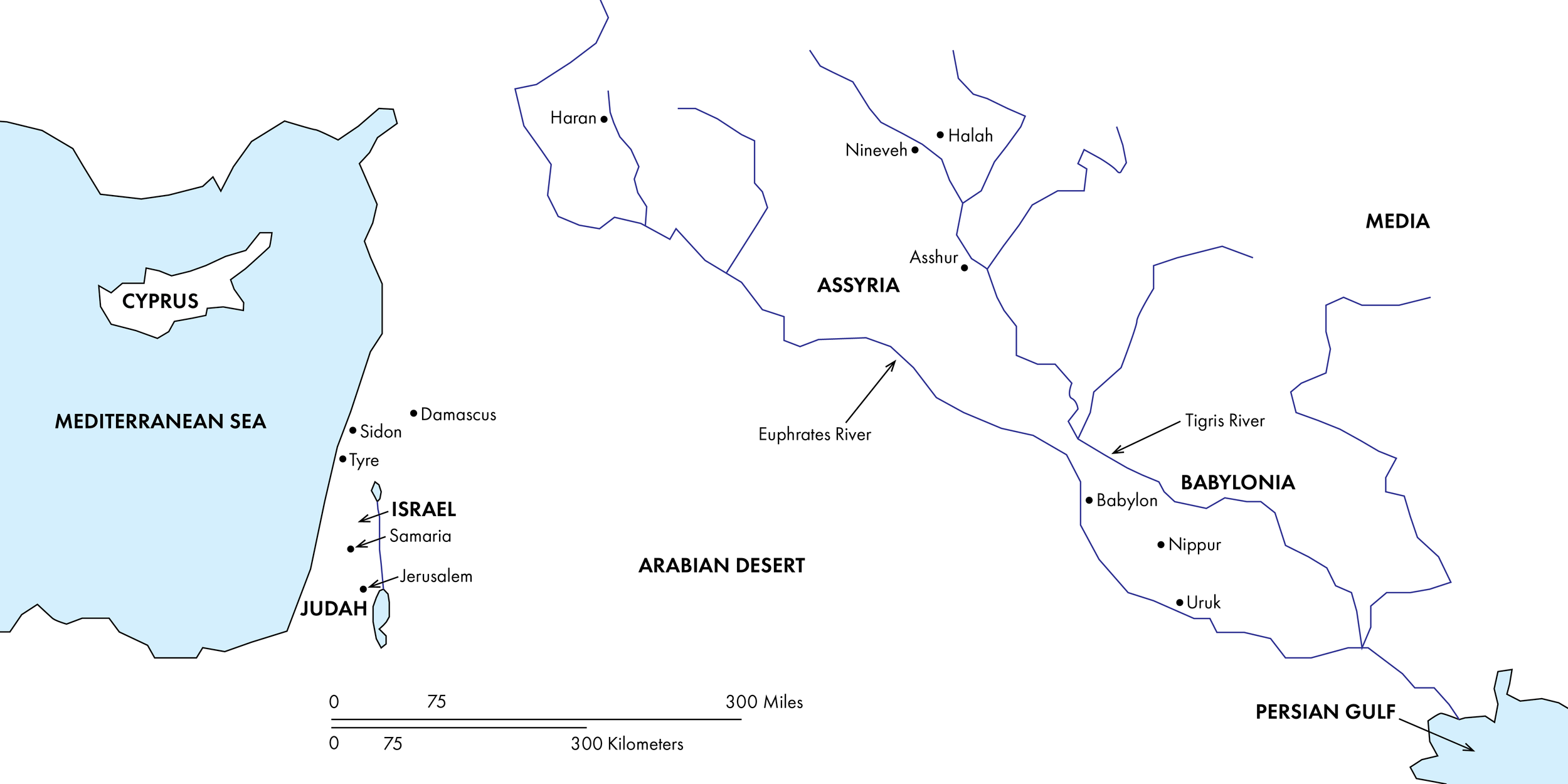
MAP:
Ezekiel, who had once planned on being a priest in the Temple in Jerusalem, was sitting by the Chebar Canal as one of the captives of Judah, when God caused him to see a vision.
OUTLINE:
INTRODUCTION (1:1-3):
Ezekiel, who had once planned on being a priest in the Temple in Jerusalem, was sitting by the Chebar Canal as one of the captives of Judah, when God caused him to see a vision.
THE 4 LIVING CREATURES (1:4-14):
Ezekiel saw a storm coming from the north with a great wind and fire flashing from the clouds.
Out of the storm came 4 living creatures. They were like humans in form, but they had 4 faces, one of a man, one of a lion, one of an ox, and one of an eagle.
They each had 4 wings, 2 of which covered their bodies, while the other 2 touched the wings of the other creatures.
Their appearance was “like burning coals of fire” (1:13). They were bright and out of their brightness came lightning.
The creatures moved straight forward without turning. They “darted to and fro, like the appearance of a flash of lightning” (1:14).
THE 4 WHEELS (1:15-21):
Beside each of the living creatures was a wheel.
The wheels had the appearance of being made of precious stones and their construction was “as it were a wheel within a wheel” (1:16).
They were covered with eyes all around.
The wheels were linked to the living creatures. Wherever the living creatures went, the wheels went.
GOD’S THRONE (1:22
Above the living creatures was a crystal “expanse,” which shined like “awe-inspiring crystal” (1:22).
When the living creatures and the expanse and the wheels moved, the wings of the creatures made a sound like rushing torrents of water.
When the living creatures stopped, Ezekiel saw above the expanse something like a throne.
The throne looked like it was made of sapphire, and a human form sat on it.
The form looked to be made of gleaming metal above the waste and like fire from below.
The form was surrounded by brightness, “like the appearance of the bow that is in the cloud on the day of rain” (1:28).
Ezekiel wrote, “Such was the appearance of the likeness of the glory of the Lord. And when I saw it, I fell on my face, and I heard the voice of one speaking” (1:28).
APPLICATION:
Though not provable from this text alone, this passage presents us with an interesting thought about the world we see around us.
It could be that many of the elements of our world have parallels in the spiritual world.
God’s throne in Ezekiel 1 was comprised of many elements of our natural world, like human forms, eyes, lions, eagles, oxen, rainbows, gemstones, metal, fire, lightning, and wings.
Considering God is the Creator of all things in heaven and on earth, it wouldn’t be strange for similarities to exist between the spiritual world and the natural world.
