Lamentations 5 - Bible Study, Explanation, and Application
Lamentations 5 Bible Study
TIMELINE:
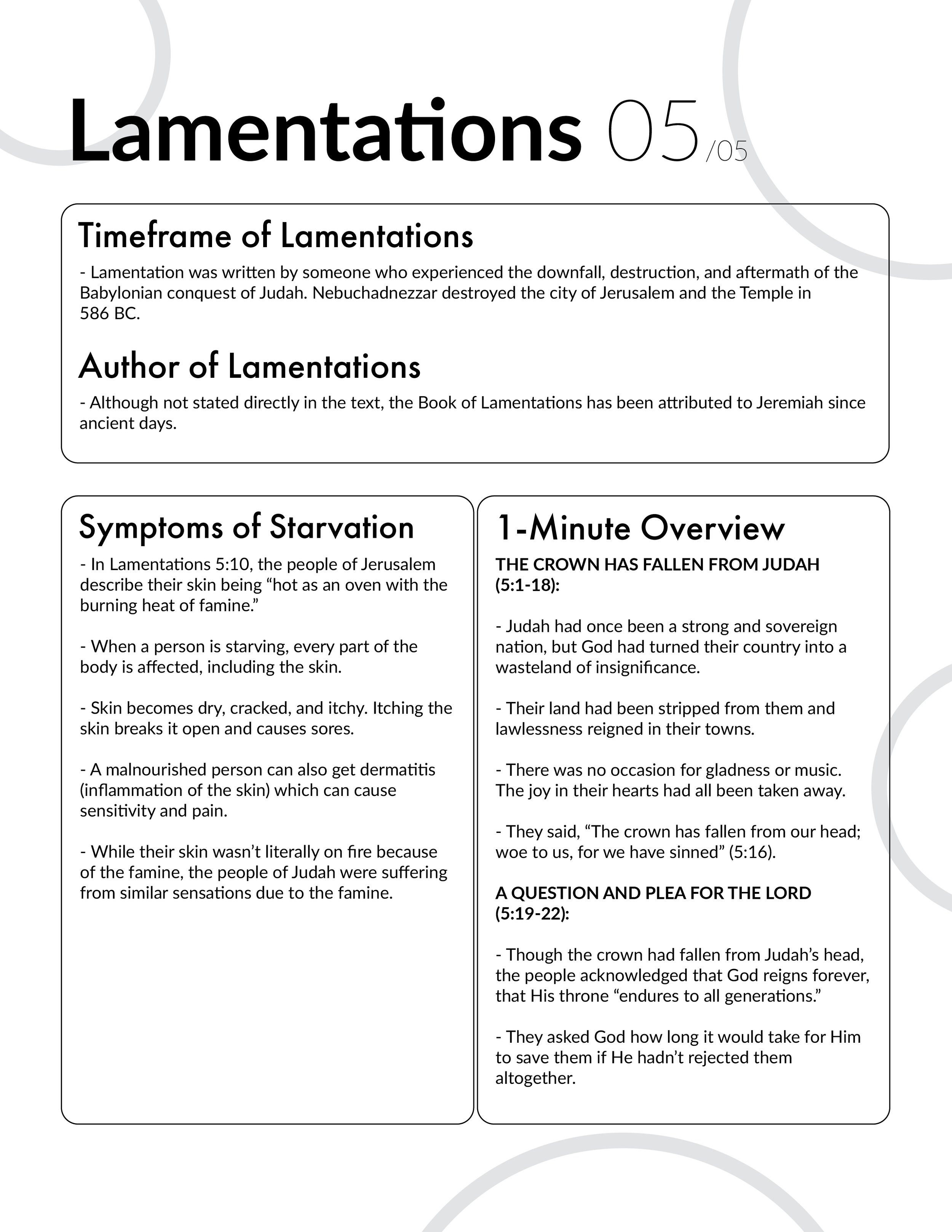
Lamentation was written by someone who experienced the downfall, destruction, and aftermath of the Babylonian conquest of Judah. Nebuchadnezzar destroyed the city of Jerusalem and the Temple in 586 BC.
AUTHOR:
Although not stated directly in the text, the Book of Lamentations has been attributed to Jeremiah since ancient days.
SYMPTOMS OF STARVATION
In Lamentations 5:10, the people of Jerusalem describe their skin being “hot as an oven with the burning heat of famine.”
When a person is starving, every part of the body is affected, including the skin.
Skin becomes dry, cracked, and itchy. Itching the skin breaks it open and causes sores.
A malnourished person can also get dermatitis (inflammation of the skin) which can cause sensitivity and pain.
While their skin wasn’t literally on fire because of the famine, the people of Judah were suffering from similar sensations due to the famine.
OUTLINE:
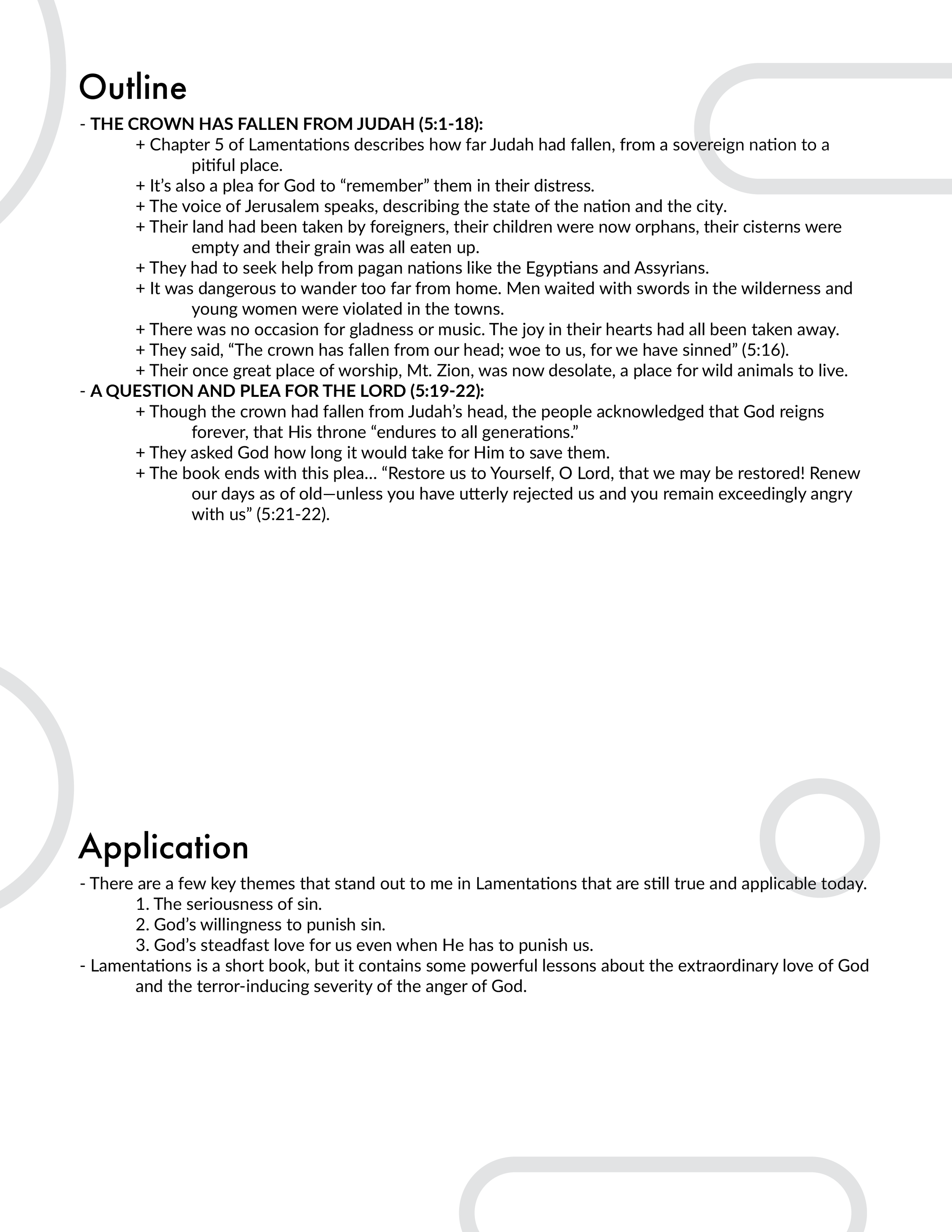
THE CROWN HAS FALLEN FROM JUDAH (5:1-18):
Chapter 5 of Lamentations describes how far Judah had fallen, from a sovereign nation to a pitiful place.
It’s also a plea for God to “remember” them in their distress.
The voice of Jerusalem speaks, describing the state of the nation and the city.
Their land had been taken by foreigners, their children were now orphans, their cisterns were empty and their grain was all eaten up.
They had to seek help from pagan nations like the Egyptians and Assyrians.
It was dangerous to wander too far from home. Men waited with swords in the wilderness and young women were violated in the towns.
There was no occasion for gladness or music. The joy in their hearts had all been taken away.
They said, “The crown has fallen from our head; woe to us, for we have sinned” (5:16).
Their once great place of worship, Mt. Zion, was now desolate, a place for wild animals to live.
A QUESTION AND PLEA FOR THE LORD (5:19-22):
Though the crown had fallen from Judah’s head, the people acknowledged that God reigns forever, that His throne “endures to all generations.”
They asked God how long it would take for Him to save them.
The book ends with this plea… “Restore us to Yourself, O Lord, that we may be restored! Renew our days as of old—unless you have utterly rejected us and you remain exceedingly angry with us” (5:21-22).
APPLICATION:
There are a few key themes that stand out to me in Lamentations that are still true and applicable today.
The seriousness of sin.
God’s willingness to punish sin.
God’s steadfast love for us even when He has to punish us.
Lamentations is a short book, but it contains some powerful lessons about the extraordinary love of God and the terror-inducing severity of the anger of God.
