Jeremiah 20 - Bible Study, Explanation, and Application
Jeremiah 20 Bible Study
INTRO AND TIMELINE:
Jeremiah was a priest who lived in Anathoth (3 miles from Jerusalem). His ministry was directed towards the people of Judah, immediately before and during their exile in Babylon. His work as a prophet dates from 627 BC through the destruction of Jerusalem by the Babylonians in 586 BC.
Jeremiah is the longest book in the English Bible by word count. The book has 52 chapters.
Jeremiah prophesied under the following Kings of Judah:
Manasseh (687-642 BC)
Amos (642-640 BC)
Josiah (640-609 BC)
Jehoahaz (also known as Shallum, 609 BC)
Jehoiakim (also known as Jeconiah or Coniah, 609-598 BC)
Jehoiachin (598-597 BC)
Zedekiah (His reign ended when Babylon conquered Judah, (597-586 BC)
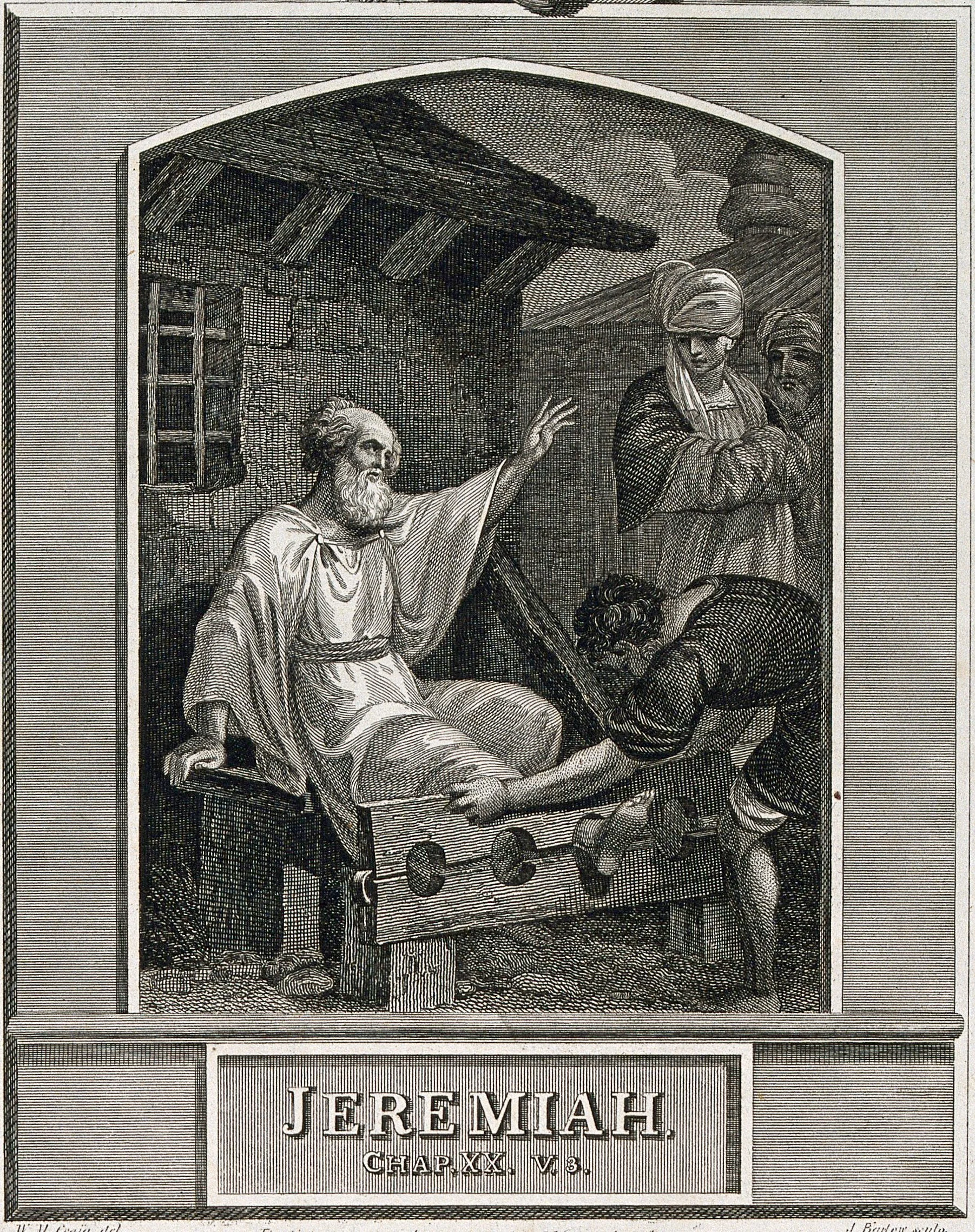
JEREMIAH IN STOCKS:
OUTLINE:
JEREMIAH BEATEN AT THE TEMPLE (20:1-6):
Jeremiah was preaching in the court of the Temple (19:14) when Pashur, one of the priests, got angry at Jeremiah, beat him, and put in stocks.
The next day, Jeremiah was released, and he prophesied against Pashur that God would change his name from Pashur to “Terror on Every Side.”
God was going to make Pashur a terror to himself and to everyone around him.
His friends would be killed by the sword of Judah’s enemies, and his family would be led out of Judah as captives to Babylon.
Pashur was told he would die in Babylon and never get to see the Temple, Jerusalem, or the Promised Land again.
Pashur pretended to be a man of God, but Jeremiah told him he was a false prophet (20:6).
AN OVERFLOW OF EMOTION FROM GOD’S PROPHET (20:7-18):
Jeremiah’s work wasn’t easy, and in the second half of chapter 20, he expressed some of the difficulties that were weighing on him.
He was the laughingstock of the city. Everyone mocked him (20:7).
His close friends were even ready to denounce him (20:10).
He prophesied a heavy message, one of violence and destruction.
He cursed the day of his birth, writing that it would have been better if he had died in the womb.
He asked, “Why did I come out from the womb to see toil and sorrow, and spend my days in shame?” (20:18).
Jeremiah had considered giving up preaching, but every time he did, he felt the message of God burning like a fire in his bones and he couldn’t hold it in.
But Jeremiah ultimately concluded that the Lord would get him through the difficulty.
He wrote, “The Lord is with me as a dread warrior; therefore my persecutors will stumble; they will not overcome me” (20:11).
APPLICATION:
Serving God can be hard!
Jeremiah put in some hard days doing things he didn’t enjoy but knew needed doing.
Necessary work isn’t always enjoyable, and I think that needs to be remembered, especially because we, as modern Christians, are often really good at making excuses to get out of work we don’t enjoy.
We’ll serve at the church for a few hours in a job we’re comfortable doing, but when was the last time you came home exhausted from a day’s worth of unpleasant work?
Most of us are willing to tolerate unpleasant work for a paycheck, but many of us aren’t willing to participate in unpleasant work for God.
