Joel 3 Bible Study
JOEL TIMELINE:
The date of the writing of the Book of Joel is a mystery. The text does not provide specifics to help modern readers know where it fits within the context of the other prophets.
Estimates from biblical interpreters span from the 800s to the 400s B.C. Some think it was written before the exile of Judah to Babylon (607-537 BC), but others suspect it to be a post-exilic work.
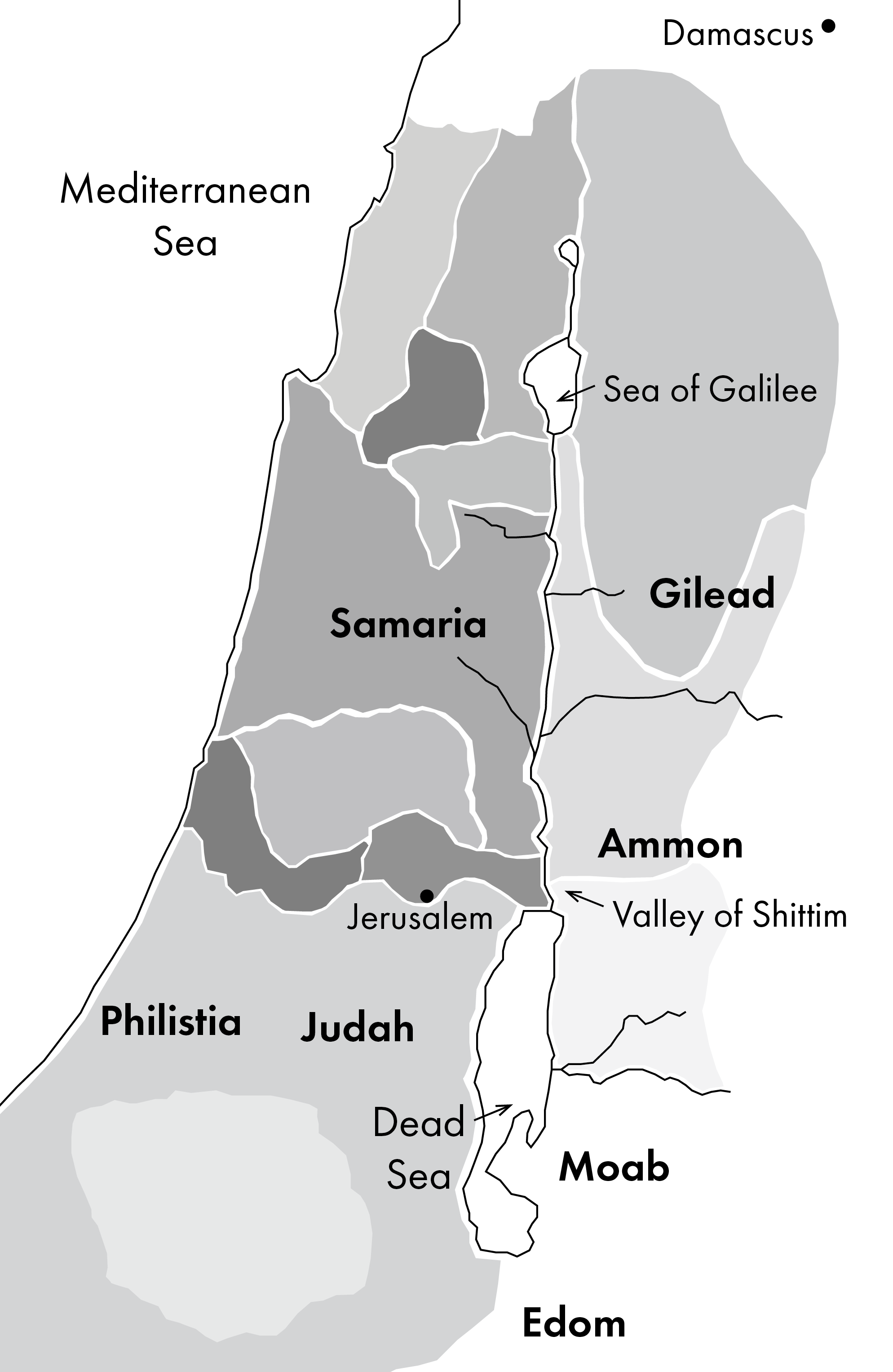
MAP (VALLEY OF SHITTIM):
OUTLINE:
JUDAH AND JERUSALEM RESTORED (3:1-21):
Joel 2 ended with a prophecy about God giving His Spirit to the people of Judah, a prophecy we know related to God’s work in the Church when the Jews were invited into His kingdom (Acts 2).
Joel 3 picks up in that context, stating that the things described would occur “in those days and at that time” (3:1), in the days of Judah’s restoration.
God, through Joel, prophesied that He would gather Judah’s neighboring nations in the Valley of Jehoshaphat and judge them for their mistreatment of His people and His land.
Many scholars believe the Valley of Jehoshaphat is the same as the Kidron Valley, between the eastern wall of Jerusalem and the Mount of Olives.
God encouraged the nations that abused His people to gather their warriors and meet Him in the Valley of Jehoshaphat (also called the “valley of decision” in Joel 3:14).
There the Lord would roar from Zion and cause the earth to quake as He destroyed His enemies (3:16).
Judah and Jerusalem would be redeemed and restored.
It would be clear to the world that God sat atop His holy mountain in Jerusalem, and foreigners would never again trample down the city or its people.
“And in that day the mountains shall drip sweet wine, and the hills shall flow with milk, and all the streambeds of Judah shall flow with water; and a fountain shall come forth from the house of the LORD and water the Valley of Shittim (3:18).
Similar to the picture presented in Ezekiel 47, a stream of water flows from the Temple and the land is restored.
Joel begins with locusts ravaging the land but ends with God reviving it.
Also similar to Ezekiel are the concluding words of the book. Ezekiel ends by naming the holy city “The Lord is There,” while Joel ends with a clear declaration that the “Lord dwells in Zion” (3:21).
APPLICATION:
Don’t be dogmatic about your interpretation of God’s future plans and the end-times before you put in the work to study the major and minor prophets.
A lot of people who were raised in churches already have their minds made up about prophecy and eschatology (study of the end-times) because they were taught to favor one view through their church’s traditional interpretive methods.
But many of these same people have never completed a thorough walkthrough of the Old Testament prophets.
My encouragement to you is to avoid proclaiming certainty on the issues until you’ve done the study.
