Jeremiah 24 - Bible Study, Explanation, and Application
Jeremiah 24 Bible Study
INTRO AND TIMELINE:
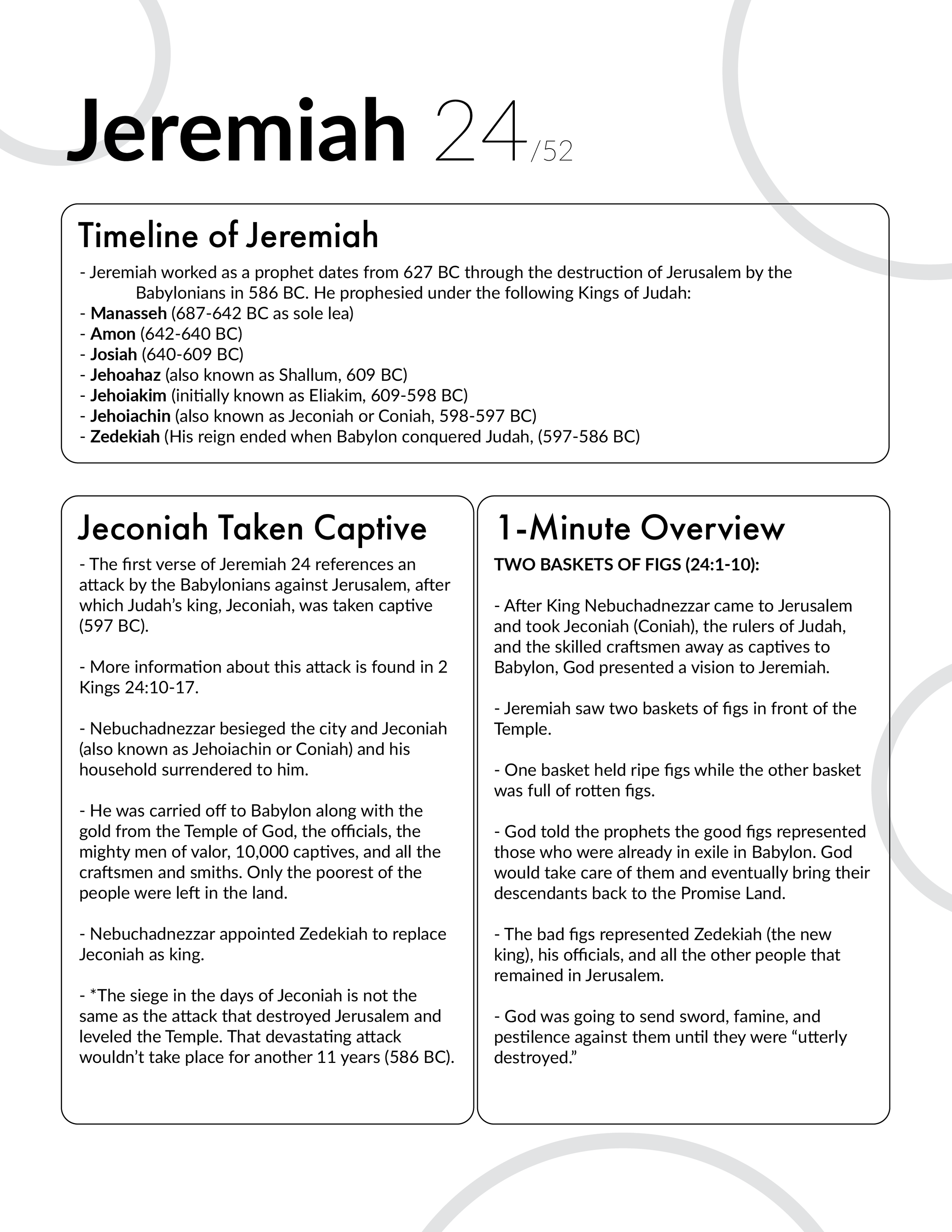
Jeremiah was a priest who lived in Anathoth (3 miles from Jerusalem). His ministry was directed towards the people of Judah, immediately before and during their exile in Babylon. His work as a prophet dates from 627 BC through the destruction of Jerusalem by the Babylonians in 586 BC.
Jeremiah is the longest book in the English Bible by word count. The book has 52 chapters.
Jeremiah prophesied under the following Kings of Judah:
Manasseh (687-642 BC)
Amos (642-640 BC)
Josiah (640-609 BC)
Jehoiakim (initially known as Eliakim, 609-598 BC)
Jehoiachin (also known as Jeconiah or Coniah, 598-597 BC)
Zedekiah (His reign ended when Babylon conquered Judah, (597-586 BC)
JECONIAH TAKEN CAPTIVE:
The first verse of Jeremiah 24 references an attack by the Babylonians against Jerusalem, after which Judah’s king, Jeconiah, was taken captive (597 BC).
More information about this attack is found in 2 Kings 24:10-17.
Nebuchadnezzar besieged the city and Jeconiah (also known as Jehoiachin or Coniah) and his household surrendered to him.
He was carried off to Babylon along with the gold from the Temple of God, the officials, the mighty men of valor, 10,000 captives, and all the craftsmen and smiths. Only the poorest of the people were left in the land.
Nebuchadnezzar appointed Zedekiah to replace Jeconiah as king.
*The siege in the days of Jeconiah is not the same as the attack that destroyed Jerusalem and leveled the Temple. That devastating attack wouldn’t take place for another 11 years (586 BC).
OUTLINE:
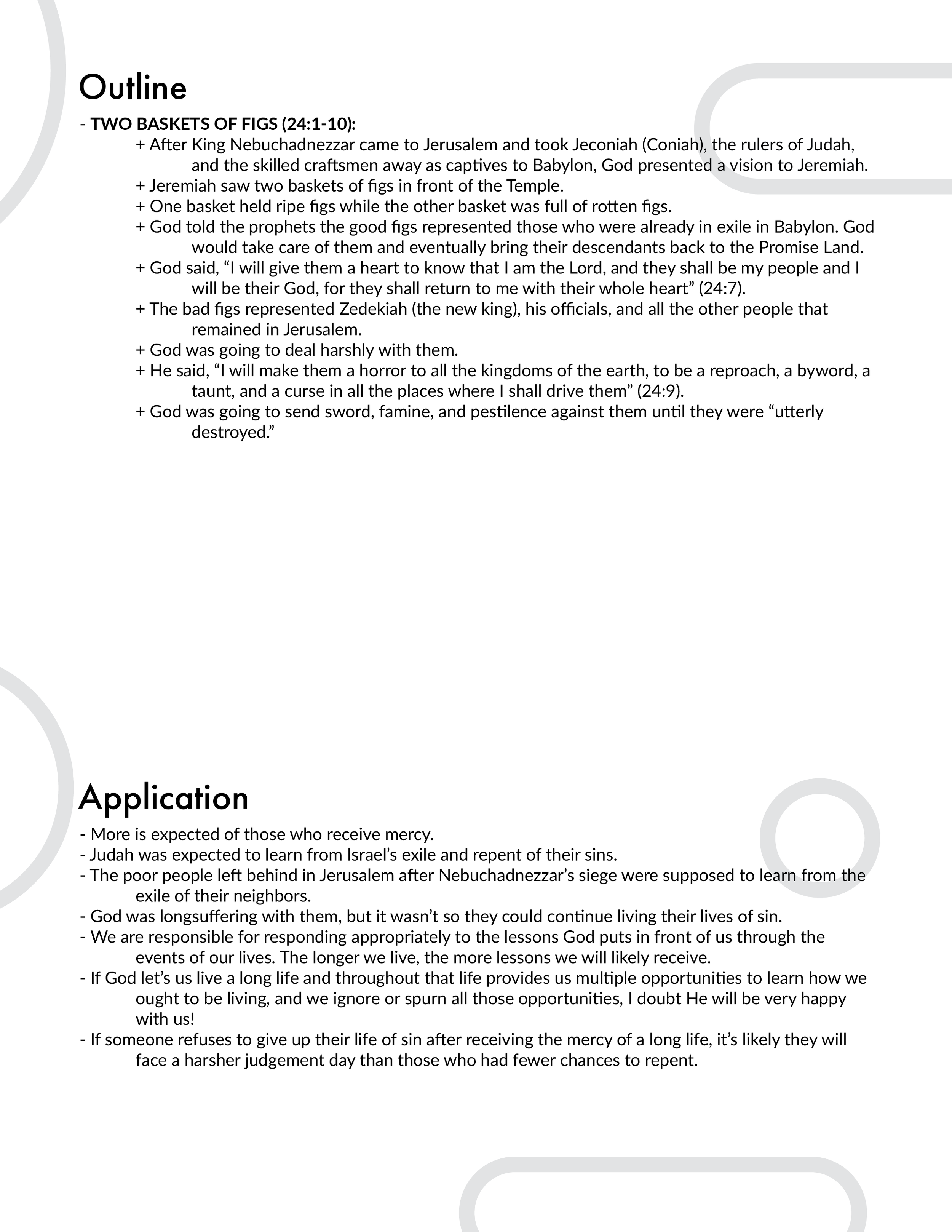
TWO BASKETS OF FIGS (24:1-10):
After King Nebuchadnezzar came to Jerusalem and took Jeconiah (Coniah), the rulers of Judah, and the skilled craftsmen away as captives to Babylon, God presented a vision to Jeremiah.
Jeremiah saw two baskets of figs in front of the Temple.
One basket held ripe figs while the other basket was full of rotten figs.
God told the prophets the good figs represented those who were already in exile in Babylon. God would take care of them and eventually bring their descendants back to the Promise Land.
God said, “I will give them a heart to know that I am the Lord, and they shall be my people and I will be their God, for they shall return to me with their whole heart” (24:7).
The bad figs represented Zedekiah (the new king), his officials, and all the other people that remained in Jerusalem.
God was going to deal harshly with them.
He said, “I will make them a horror to all the kingdoms of the earth, to be a reproach, a byword, a taunt, and a curse in all the places where I shall drive them” (24:9).
God was going to send sword, famine, and pestilence against them until they were “utterly destroyed.”
APPLICATION:
More is expected of those who receive mercy.
Judah was expected to learn from Israel’s exile and repent of their sins.
The poor people left behind in Jerusalem after Nebuchadnezzar’s siege were supposed to learn from the exile of their neighbors.
God was longsuffering with them, but it wasn’t so they could continue living their lives of sin.
We are responsible for responding appropriately to the lessons God puts in front of us through the events of our lives. The longer we live, the more lessons we will likely receive.
If God let’s us live a long life and throughout that life provides us multiple opportunities to learn how we ought to be living, and we ignore or spurn all those opportunities, I doubt He will be very happy with us!
If someone refuses to give up their life of sin after receiving the mercy of a long life, it’s likely they will face a harsher judgement day than those who had fewer chances to repent.
